Choosing a microscope starts with the work you need it to do. A teaching lab viewing prepared slides has different needs than a research lab examining cells in culture or an industrial team inspecting a large component. The specimen, required detail, viewing method, and imaging needs should guide the decision before you compare individual models. This practical guide explains how to choose a microscope for laboratory, research, education, veterinary, and industrial applications. ACCU-SCOPE manufactures professional microscopy and digital imaging systems for these settings, so the goal is to help you narrow the type and features that fit your work.
Start With Your Application and Specimen
Begin with the specimen. Ask what you will observe most often, how the specimen will be prepared, and what you need to see or measure. A thin section on a glass slide may point toward a compound microscope, while a larger solid object may be better suited to stereo microscopes. Cells growing in a flask or culture vessel can make an inverted design more practical because the objectives view the specimen from below.
You should also consider how often you will change magnification, move across a specimen, manipulate an object under the optics, or capture images. A microscope used for routine classroom observation may need straightforward controls and durable construction. A clinical or research system may call for more objective choices, contrast methods, camera compatibility, or fluorescence capability. Listing these needs first gives you a useful filter for every feature that follows.
Understand the Main Types of Microscopes
A microscope type overview helps narrow the field before you compare specifications. The most useful distinction isn’t which design sounds more advanced. It’s which design matches the specimen and the observation task.
Compound Microscopes
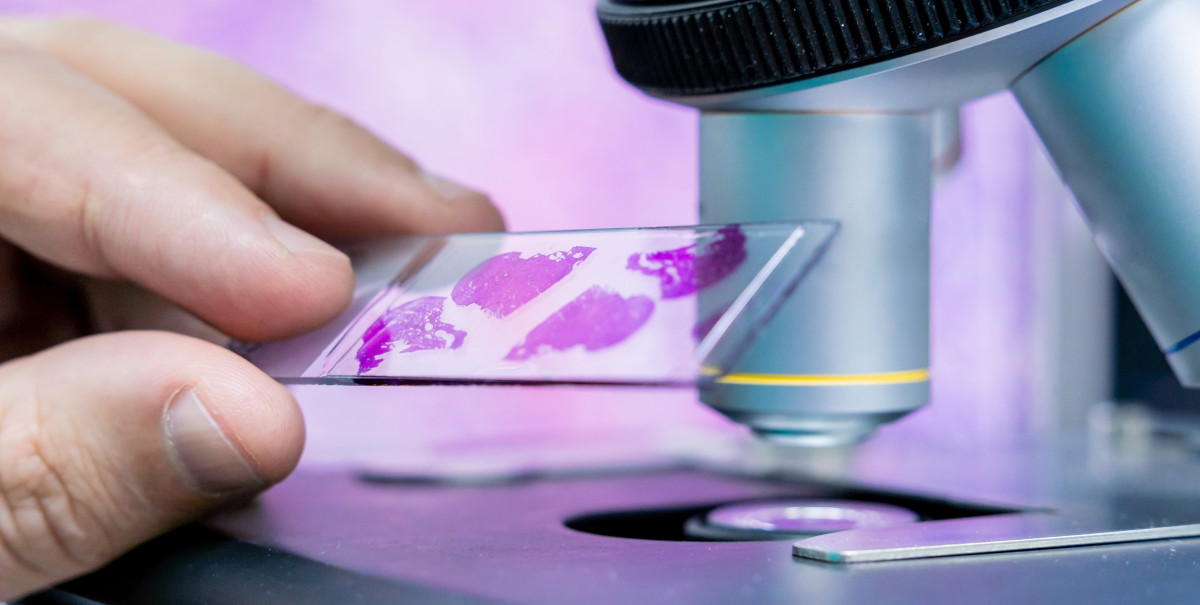
A compound microscope (also referred to as an upright microscope) is commonly used when you need higher-magnification views of small specimens, especially material prepared on slides. Clinical laboratories, veterinary practices, research facilities, and teaching labs often use a compound microscope for cells, tissue sections, microorganisms, blood samples, and other slide-based work.
Most compound microscope systems use multiple objectives so the user can move between broader views and finer detail. The ideal objective selection depends on the specimen and the work being performed. When comparing a compound microscope, consider the useful resolution, contrast, and optical quality rather than the largest magnification number printed in a specification sheet. A compound microscope should support the detail you need to observe.
Upright vs. Inverted Microscopes
Upright and inverted microscopes differ mainly in how the objectives are positioned relative to the specimen. An upright compound microscope places the objectives above the stage and is well suited to prepared slides and many routine laboratory samples. This familiar configuration is common in clinical, veterinary, research, and education settings.
An inverted microscope places the objectives below the specimen. This arrangement is best suited for viewing cells and samples in culture vessels because the specimen is generally located at the bottom of the culture vessel, and it can remain in the container during observation. In research environments, the choice between an upright compound microscope and an inverted system often comes down to specimen format and workflow rather than magnification alone.
Stereo Microscopes
Stereo microscopes are designed for larger specimens, surfaces, and objects that benefit from a three-dimensional view. They are commonly used for dissection, inspection, assembly, education, specimen handling, and other tasks where the user needs room to work beneath the optics.
Working distance is especially important when comparing stereo microscopes. More space between the objective and specimen can make it easier to manipulate tools or position larger objects. Stereo microscopes may use fixed magnification or zoom systems, so consider how often the operator needs to change the viewing level during a task. For many inspection and dissection applications, smooth zoom control can be more useful than a single fixed setting.
Monocular, Binocular, and Trinocular Microscopes
Viewing-head configuration affects both viewing and future imaging options. A monocular microscope uses one eyepiece and may be practical for introductory education or simpler routine work. Binocular microscopes provide two eyepieces for direct observation and are common in laboratories where users spend more time at the instrument.
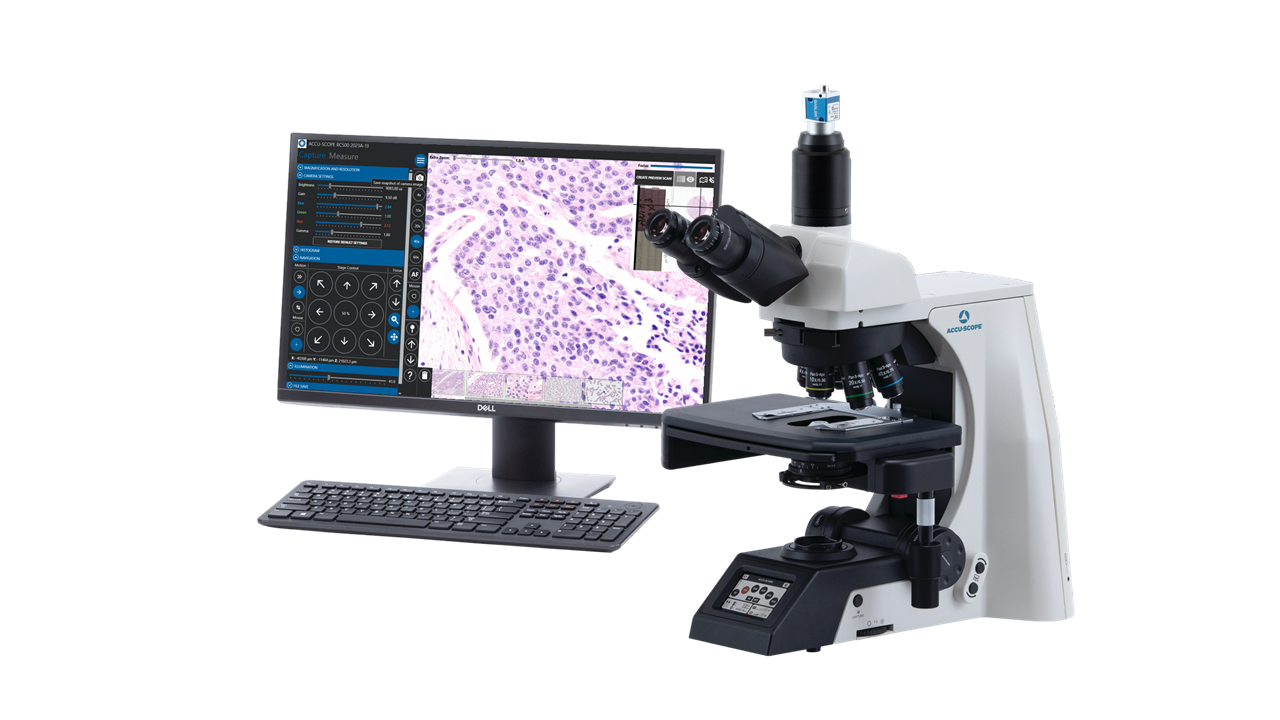
Trinocular configurations add a third optical path that can support a compatible camera. If image capture, teaching, remote viewing, or documentation may become part of the workflow later, choosing a camera-ready system at the start can make future expansion easier. ACCU-SCOPE recommends considering camera needs when the microscope is selected, even if the camera will be added later.
Digital Imaging and Camera Options
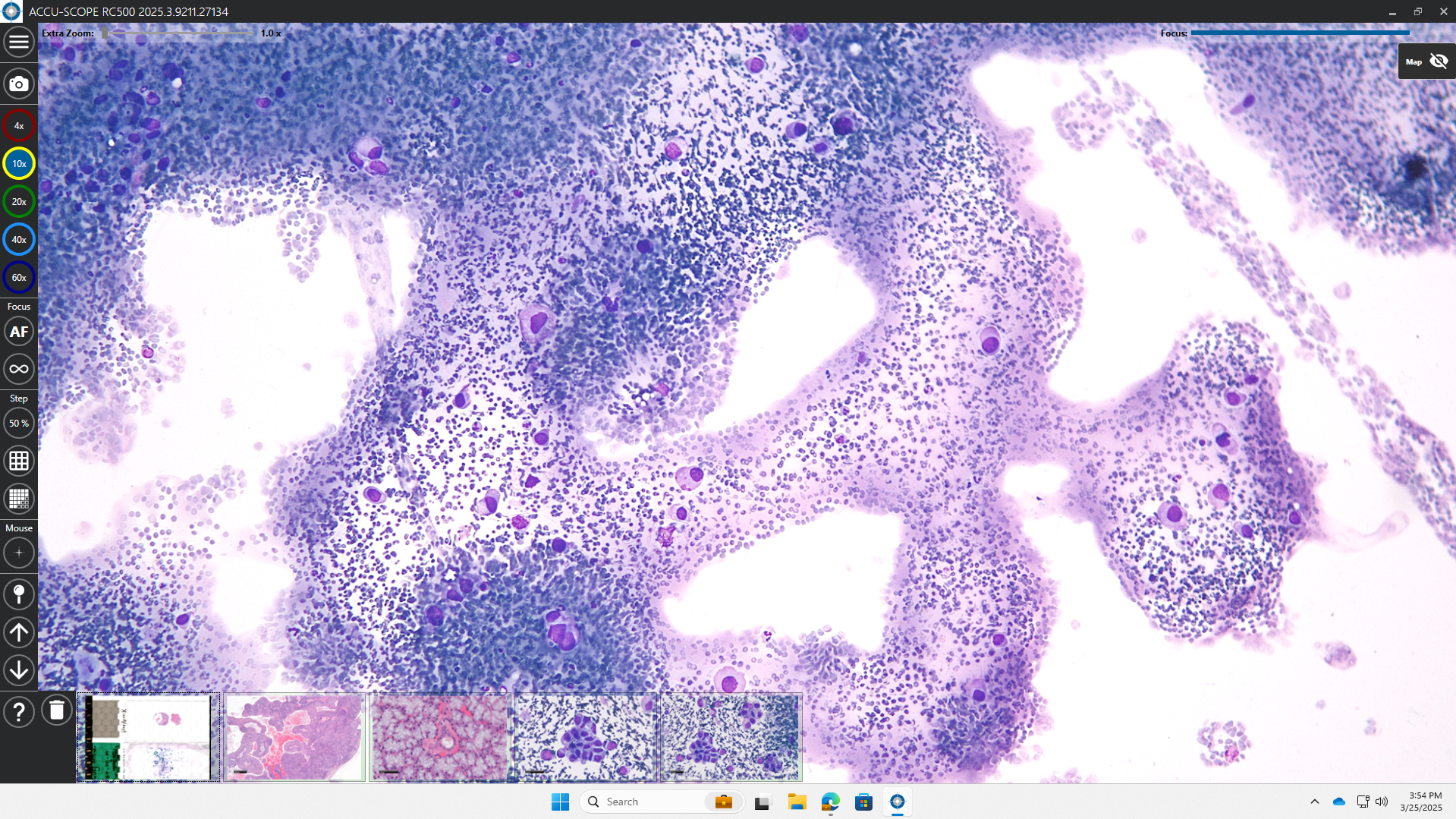
Digital microscopes and camera-equipped optical systems can display, capture, and share images on a screen. In practice, many laboratories add digital imaging to a traditional optical microscope through a compatible camera and software. This can support documentation, teaching, image review, collaboration, and analysis.
When comparing digital microscopes or camera options, think about the complete imaging path. Camera resolution, adapter compatibility, output type, software, and the intended use of the images all matter. Digital microscopes can be useful when screen-based viewing is central to the task, while a compound microscope or one of several stereo microscopes with a camera may be a better fit when direct observation remains important.
Key Features to Compare Before Buying a Microscope
Once you know the microscope type, compare the features that affect image quality and daily use. A long specification list is only helpful when you can connect each item to the application.
Magnification, Resolution, and Optical Quality
Magnification tells you how much larger an image appears, but it doesn’t determine image quality by itself. Resolution describes the ability to distinguish fine detail, and contrast helps separate structures within the specimen. A useful optical microscope balances these factors for the intended sample.
Objective selection plays a major role in a compound microscope. Lower-power objectives help users locate material and view a wider area, while higher-power objectives reveal smaller details within a narrower field. Numerical aperture can also matter in advanced applications because it relates to resolving power and light collection. Plan, fluorite, or apochromatic correction may be relevant when an application calls for a flatter field or more demanding color correction, but the most suitable level depends on the work.
Illumination and Contrast Methods
Illumination should match the specimen and the observation method. LED illumination is common in modern laboratory and education microscopes because it provides a practical light source with long service life and low heat output. Some systems may also use other light sources depending on the application.
Brightfield works well for many prepared and stained specimens. Phase contrast can improve visibility in certain transparent, unstained samples. Darkfield creates a different contrast effect for selected specimens, while fluorescence is used when labeled structures or specific signals need to be observed. Condenser and diaphragm controls also influence how light reaches the sample. But don’t assume every compound microscope or stereo microscope supports every contrast method. Check the configuration required for the technique you plan to use.
Stage, Focus, and Working Distance
A mechanical stage can make slide movement more controlled, especially when users need to scan across a specimen in a repeatable pattern. Coarse focus brings the sample into view, while fine focus supports smaller adjustments at higher magnification. Stable stage movement and smooth focus controls become increasingly important as detail increases.
For stereo microscopes, working distance deserves equal attention. A larger working area can help when users need to dissect, assemble, position tools, or inspect bulky objects. The right choice depends on the physical size of the specimen and how much access the operator needs beneath the microscope.
Head Type and Ergonomics
Microscope fit can affect daily usability. Check interpupillary adjustment, diopter settings, viewing angle, control placement, and the height of the eyepieces. Laboratories with several operators should consider how quickly the system can be adjusted between users. Ergonomic viewing heads may also be useful for people who spend extended periods at the microscope by adjusting eyetube inclination for optimal comfort.
Digital Imaging and Software Compatibility
If digital imaging is part of the workflow, look beyond megapixel count. Confirm that the microscope, camera, adapter, output, and software can work together for the intended task. Some users need basic documentation. Others need measurements, image comparison, teaching displays, or more advanced data analysis. Digital microscopes and camera systems should be evaluated against those actual requirements rather than a single camera specification.
Choosing a Microscope by Application
Clinical and Life Science Research
Clinical laboratories often use an upright compound microscope for prepared slides in areas such as pathology, hematology, microbiology, cytology, and histology. Research laboratories may use upright systems for slide-based samples and inverted microscopes for cells in culture. Phase contrast or fluorescence may be appropriate when the specimen and protocol call for those methods. High numerical aperture objectives can also be useful when fine detail and light collection are important, but objective choice should still follow the application.
Education and Student Labs
Student microscopes should be straightforward to operate and durable enough for repeated classroom use. Glass optics, stable construction, LED illumination, and a mechanical stage can support routine teaching. Monocular models may fit introductory settings, while binocular or trinocular systems can support more advanced courses and camera use. A compound microscope is common for prepared slides, while stereo microscopes are useful for dissection, exploration, and larger specimens.
Industrial Inspection and Quality Control
Stereo microscopes are often a strong choice for inspecting larger parts, surfaces, assemblies, and components because they provide depth perception and useful working space. Reflected illumination is important for opaque specimens that can’t be viewed with transmitted light. Materials science applications may also use reflected-light microscopes designed to examine opaque surfaces. When documentation is required, a camera can add image capture and sharing to the inspection workflow.
Veterinary and Gemological Applications
Veterinary laboratories may use a compound microscope for prepared slides, blood, and fecal samples examined for parasites. Stereo microscopes can also support larger specimens and tasks that benefit from depth perception. Gemological work commonly relies on stereo microscopes because three-dimensional viewing, surface examination, working distance, and controllable lighting can help users inspect stones and features at practical magnifications.
Budget, Maintenance, and Long-Term Support
The base microscope price is only one part of the purchasing decision. Budget for the configuration you actually need, including objectives, stands, illumination, cameras, adapters, software, and other accessories. It also helps to consider replacement parts, routine maintenance, warranty coverage, and access to product support.
Think about future needs before locking in the configuration. A teaching lab may add digital imaging later. A research group may need additional objectives or fluorescence capability. A veterinary practice may decide to add a camera for documentation or consultation. Planning for expansion can be more practical than choosing a system that meets only today’s minimum requirements.
Why Choose ACCU-SCOPE?
ACCU-SCOPE provides microscopy and digital imaging solutions for clinical, veterinary, research, education, and industrial applications. Its product range includes upright, inverted, monocular, and stereo microscopes, along with digital cameras, imaging software, and fluorescence illumination options. The company positions its systems around optical performance, useful features, strong value, and application support.
Because the right microscope depends on the specimen and workflow, ACCU-SCOPE can help users identify a configuration that fits the task rather than choosing solely by magnification or price. That approach is especially useful when imaging, contrast techniques, or future expansion need to be considered at the time of purchase.
Microscope Buying Checklist
- Specimen type and preparation method
- Required detail, resolution, and useful magnification
- Compound microscope, inverted microscope, or stereo microscope
- Monocular, binocular, or trinocular viewing configuration
- Illumination and contrast methods
- Stage movement, focus controls, and working distance
- Digital imaging, camera, and software needs
- Ergonomics and number of users
- Objectives, accessories, and future expansion
- Budget, maintenance, warranty, and support expectations
Frequently Asked Questions About Choosing a Microscope
What Should I Look for When Buying a Microscope?
Start with the specimen and the work you need to perform. Then compare microscope type, optical quality, useful magnification, illumination, stage or working distance, head configuration, ergonomics, and digital imaging needs. Support, accessories, maintenance, and future expansion also belong in the decision.
What Is a Good Microscope for a Beginner?
A good beginner microscope is easy to operate and suited to the specimens being viewed. For prepared slides, a basic compound microscope with quality optics, stable focus controls, and practical illumination may be appropriate. For larger objects, dissection, or three-dimensional observation, stereo microscopes may be a better starting point. The application matters more than choosing the model with the highest listed magnification.
Should I Choose a Compound or Stereo Microscope?
Choose a compound microscope when you need higher-magnification views of small or slide-mounted specimens. Choose stereo microscopes when you need a three-dimensional view of larger objects, more working distance, or room to manipulate the specimen. Some laboratories need both because the two designs serve different tasks.
Do I Need a Binocular or Trinocular Microscope?
A binocular microscope supports direct viewing through two eyepieces. A trinocular microscope adds a third optical path that can support a compatible camera. If documentation, teaching, consultation, or digital image capture is part of the current or future workflow, a trinocular configuration may be the more flexible choice.
How Important Is Magnification When Choosing a Microscope?
Magnification matters, but it shouldn’t be the only selection criterion. Useful detail depends on resolution, objective quality, contrast, illumination, and the specimen itself. A microscope that provides the right image at the required working level is more useful than one chosen mainly for an unusually high magnification claim.
Find the Right Microscope for Your Application
Which microscope is right for you? Start with the specimen, define the observation and imaging needs, and compare the types and features that support the work. Review ACCU-SCOPE systems or contact the team for application support.