

Types of Microbiology Microscopes
Microbiology encompasses many specimen types and observation methods, so there is no single microscope configuration for every application. Consider what you will be examining and what method you will be using before selecting a system.
Compound Microscopes
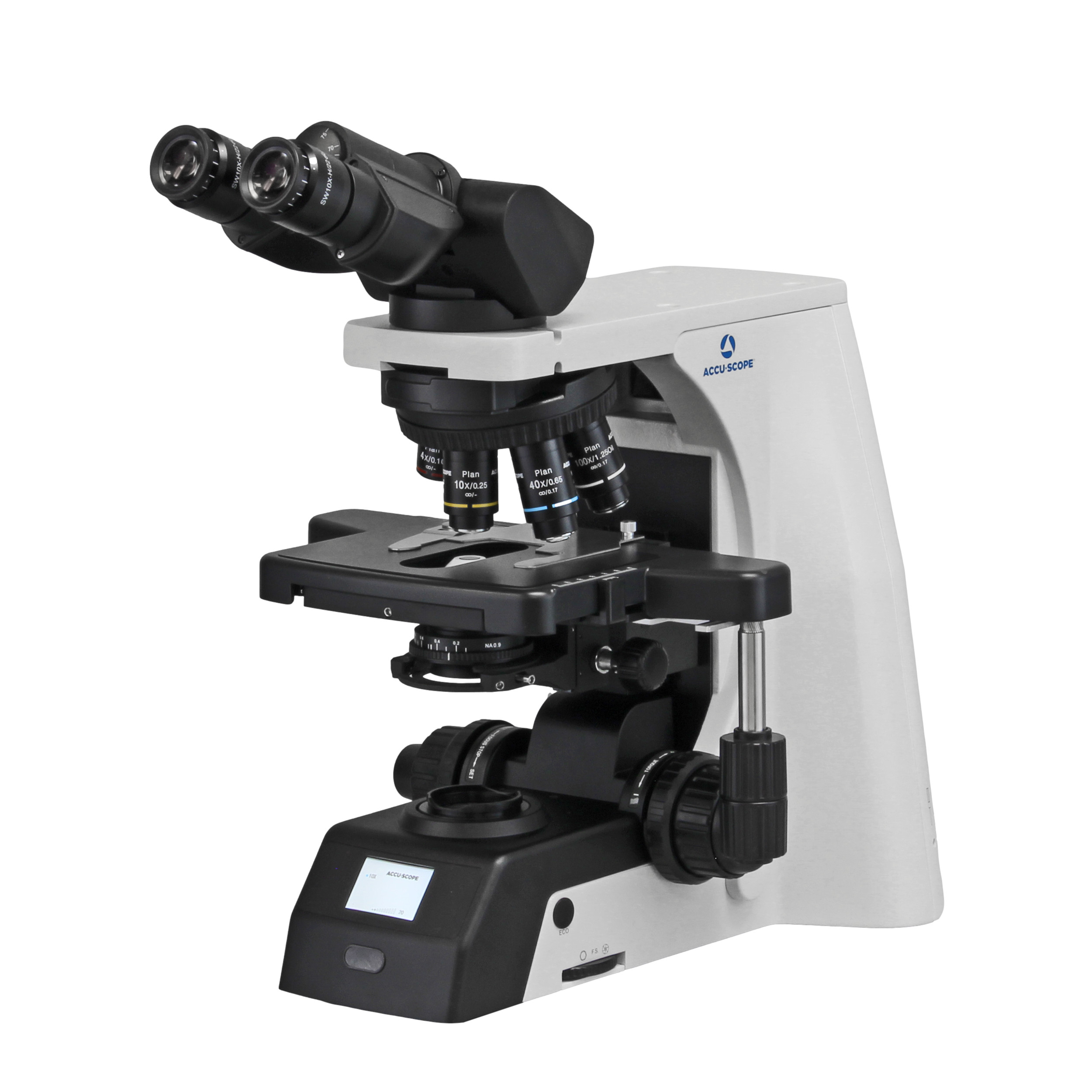
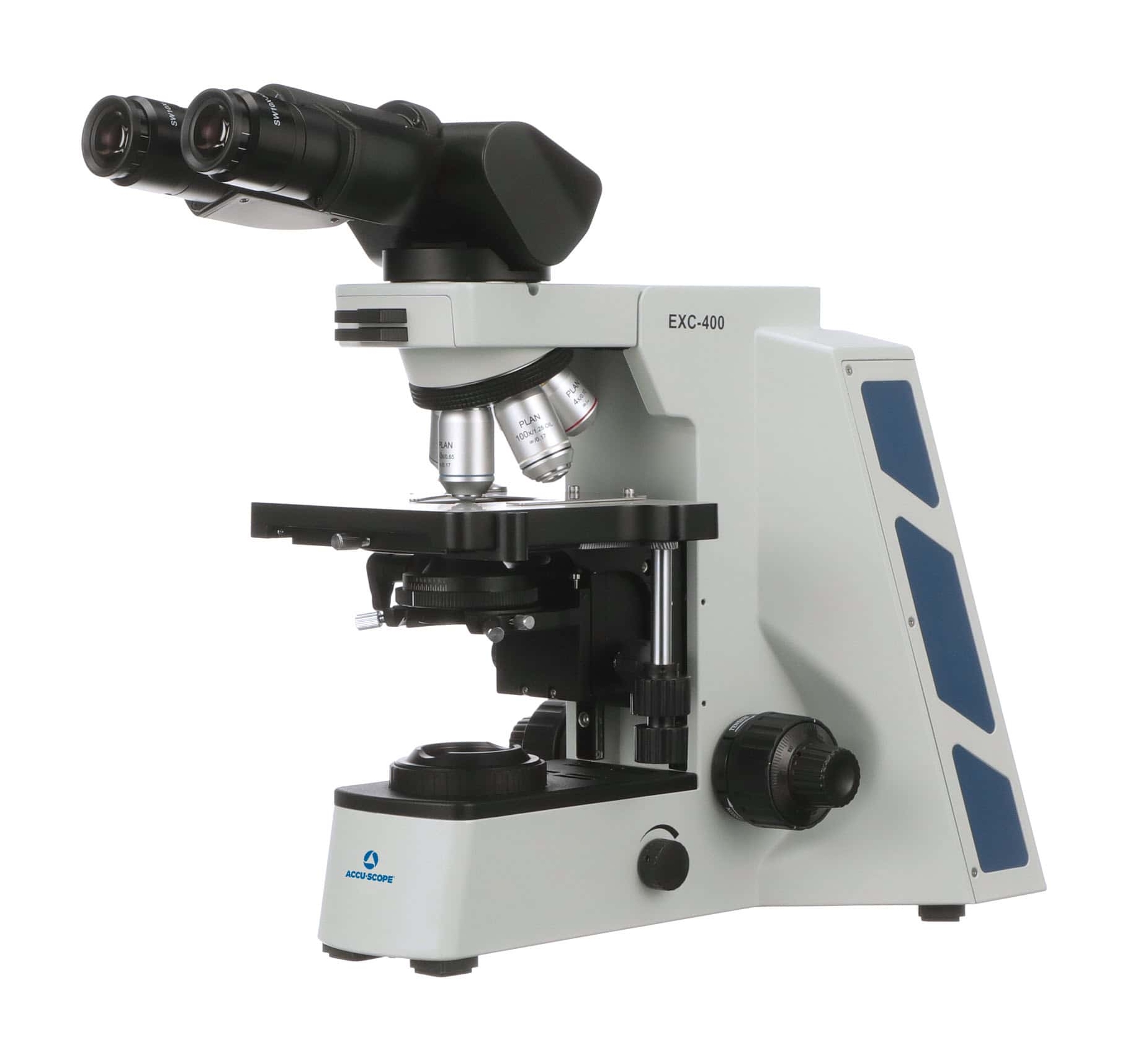
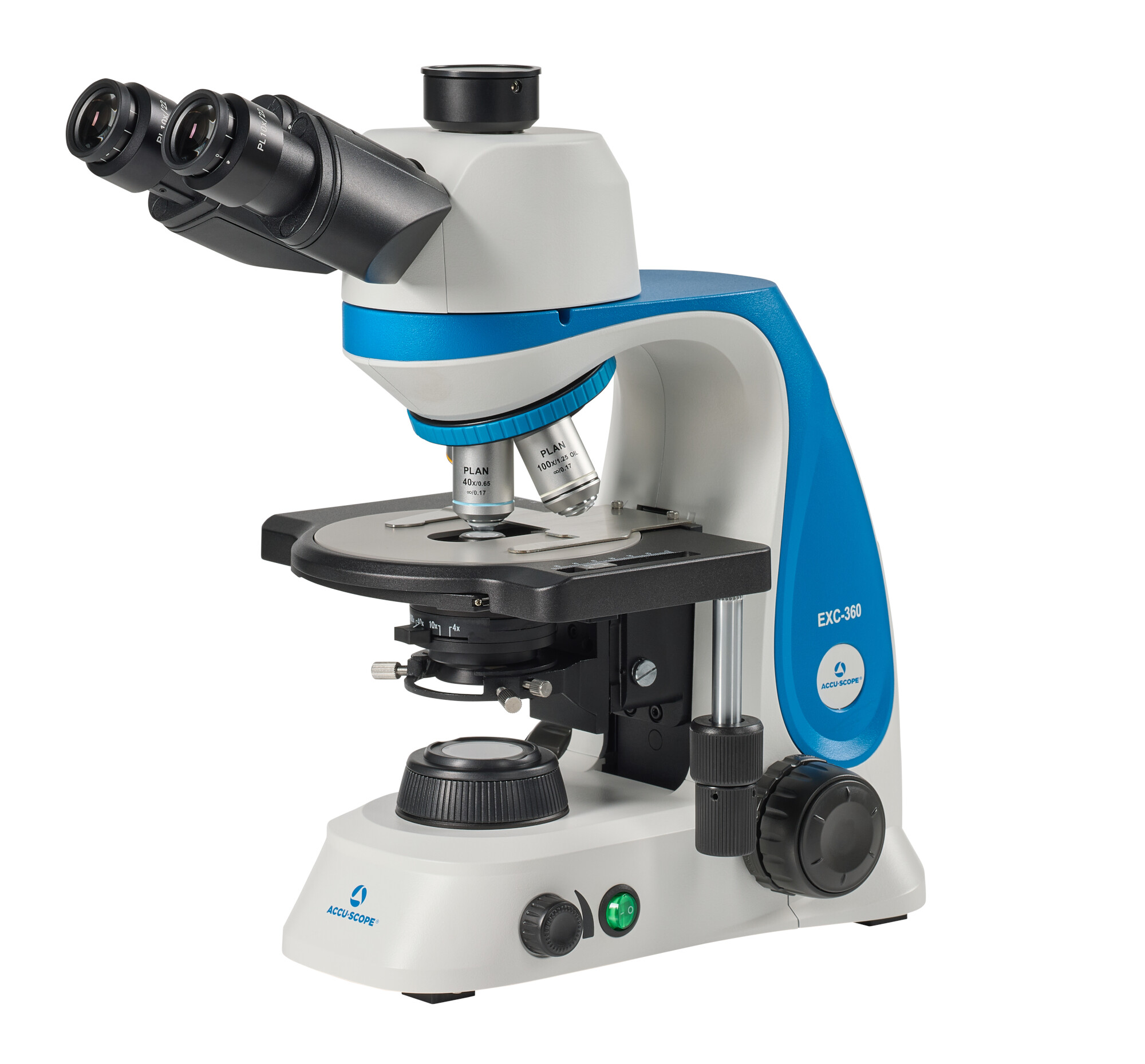
An upright compound microscope is a standard choice for routine microbiology involving specimens prepared on glass slides. These systems are well suited for examining stained bacteria, fungi, protozoa, and other microorganisms.
Typical configurations provide objective magnifications ranging from approximately 4x or 10x through 100x. With 10x eyepieces, a 100x oil-immersion objective provides 1000x total magnification, making it an important option when examining fine bacterial morphology.
Stereo Microscopes
A stereo microscope, sometimes called a dissecting microscope, operates at lower magnifications and provides a broad field of view, greater depth perception, and more working room around the specimen. In microbiology workflows, stereo microscopes can be useful for colony picking, sample preparation, sorting, manipulation, and dissection rather than detailed observation of individual microorganisms.
Incident illumination is useful for viewing the surface of opaque specimens, while transmitted illumination is appropriate when light must pass through a transparent or translucent sample.
Inverted Microscopes
Inverted microscopes place the objective lenses below the specimen stage. This arrangement is especially useful for cultures, living cells, and specimens contained in dishes, flasks, and multi-well plates because samples can remain in their normal culture vessels during observation.
When choosing an inverted system, consider stage dimensions, vessel holders, condenser clearance, working distance, and the contrast techniques required by your workflow.
Digital Microscope Packages
A digital microscope combines optical observation with image capture, documentation, measurement, teaching, or sharing capabilities. Integrated or attached cameras can help laboratories document representative fields, compare specimens, train staff, and share findings with colleagues.
Depending on the camera and microscope configuration, output options may include USB for computer-based imaging, HDMI for direct monitor viewing, or Wi-Fi for compatible mobile devices.